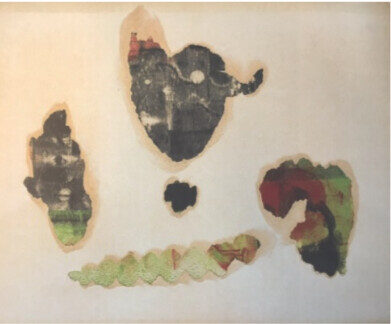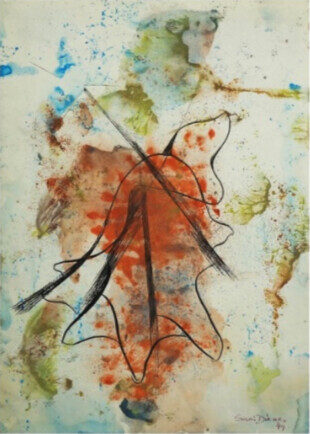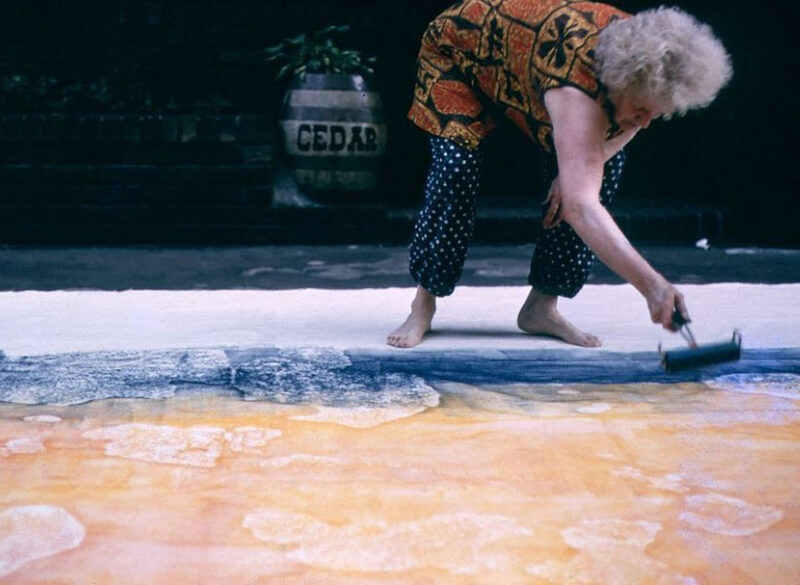
Sari Dienes was a Hungarian-American artist who is now being rediscovered and has been represented since 2016 in the Kunstmuseum Basel and its Department of Prints and Drawings. Her most important work dates from the 1950s, when she was among the pioneers of assemblage, collage and frottage in New York and played a formative role for artists such as Robert Rauschenberg and the younger Jasper Johns. From 1928 to 1939 Dienes studied in Paris with Fernand Léger and Amédée Ozenfant. She then lived mostly in New York, where she first helped Ozenfant set up a new art school and later taught at the Parsons School of Design.
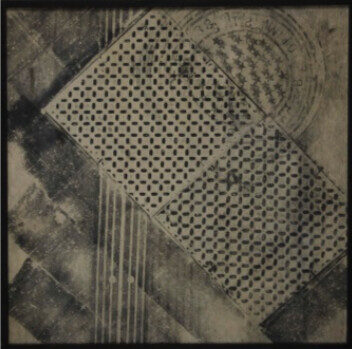
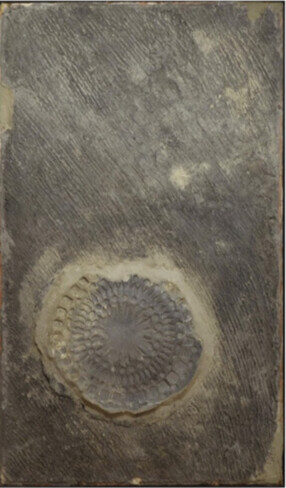
After creating her first assemblages from waste and other found materials in the late 1940s, she experimented intensively with frottage in the early 1950s, transferring the surface texture of objects onto paper or Vebril (a kind of gauze) by rubbing with chalk or graphite. Sari Dienes frottaged not only gravestones in New York but also sections of pavements including subway grates and manhole covers. For these larger formats she used a small colour roller of the kind used in print workshops. She did this early in the morning before traffic began and had younger artists such as Cy Twombly, Rauschenberg and Johns assist her. As in the exhibited square-format example, Dienes combined such urban elements and structures into compositions and worked subtly with overlapping textures. In 1954 she showed her “Sidewalk Rubbings” not only in a solo exhibition at the Betty Parsons Gallery but also in Bonwit Teller department store windows in July 1955, as other artists did at the time.
Source: Kunstmuseum Basel | FOKUS PAPIER - RANDGÄNGE DER ZEICHNUNG - 5 August–19 November 2017
Image: Peter Moore | Northwestern University | Sari Dienes Foundation