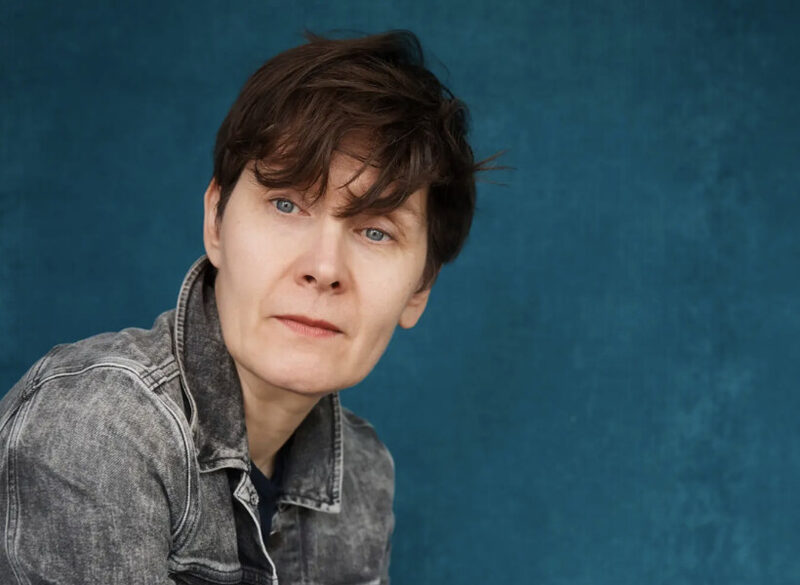
After attending the commercial school in Chur and the Zurich School of Textiles, Zilla Leutenegger worked for several years as a buyer for a clothing company in Zurich. From 1995 to 1999 she studied at the Zurich University of the Arts, where she took the fine art course. Gallery exhibitions in Switzerland, New York and Berlin. Participation in numerous international group exhibitions. Solo exhibition at the Saarlandmuseum in Saarbrücken in 2006. Several awards, including the City of Zurich fine art grant in 2001, 2002 and 2004, the 2004 Manor Art Prize Chur and the 2005 Swiss Art Award. Zilla Leutenegger lives and works in Zurich.
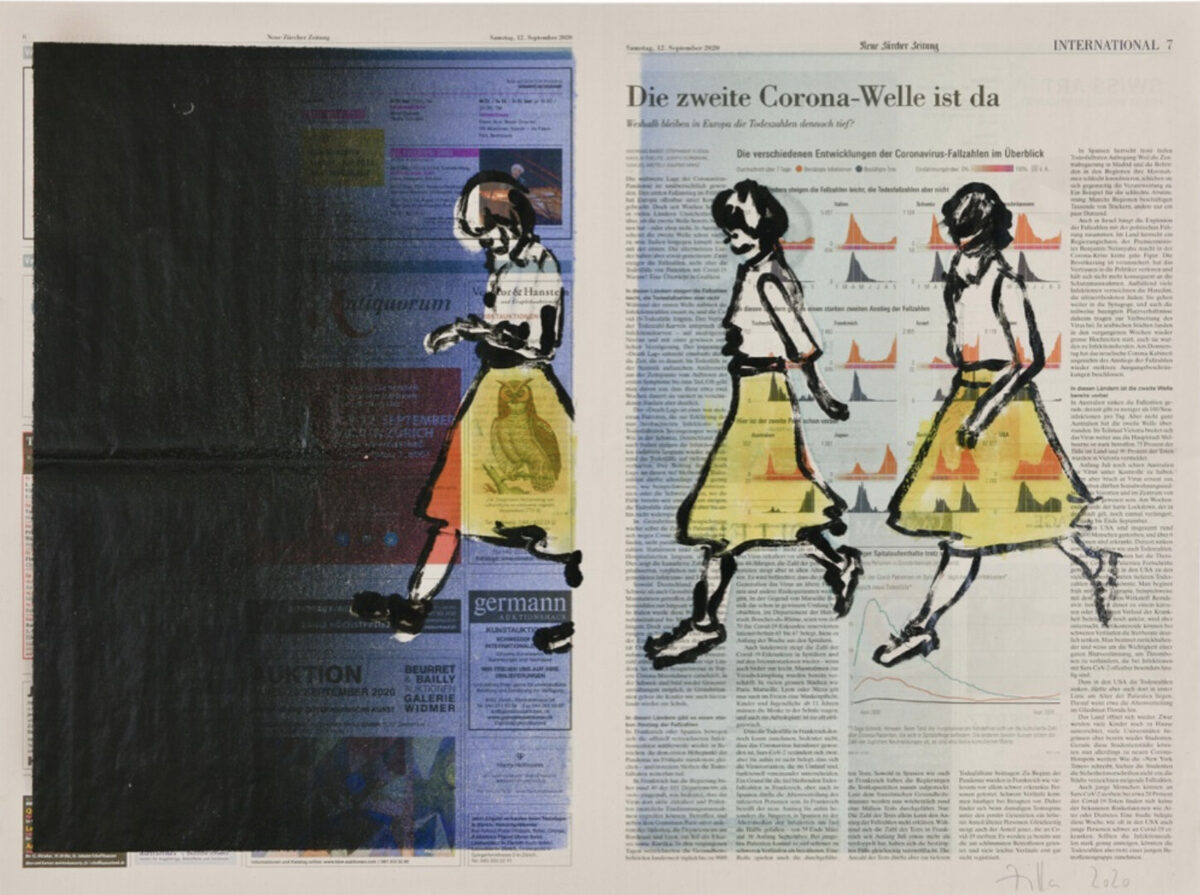
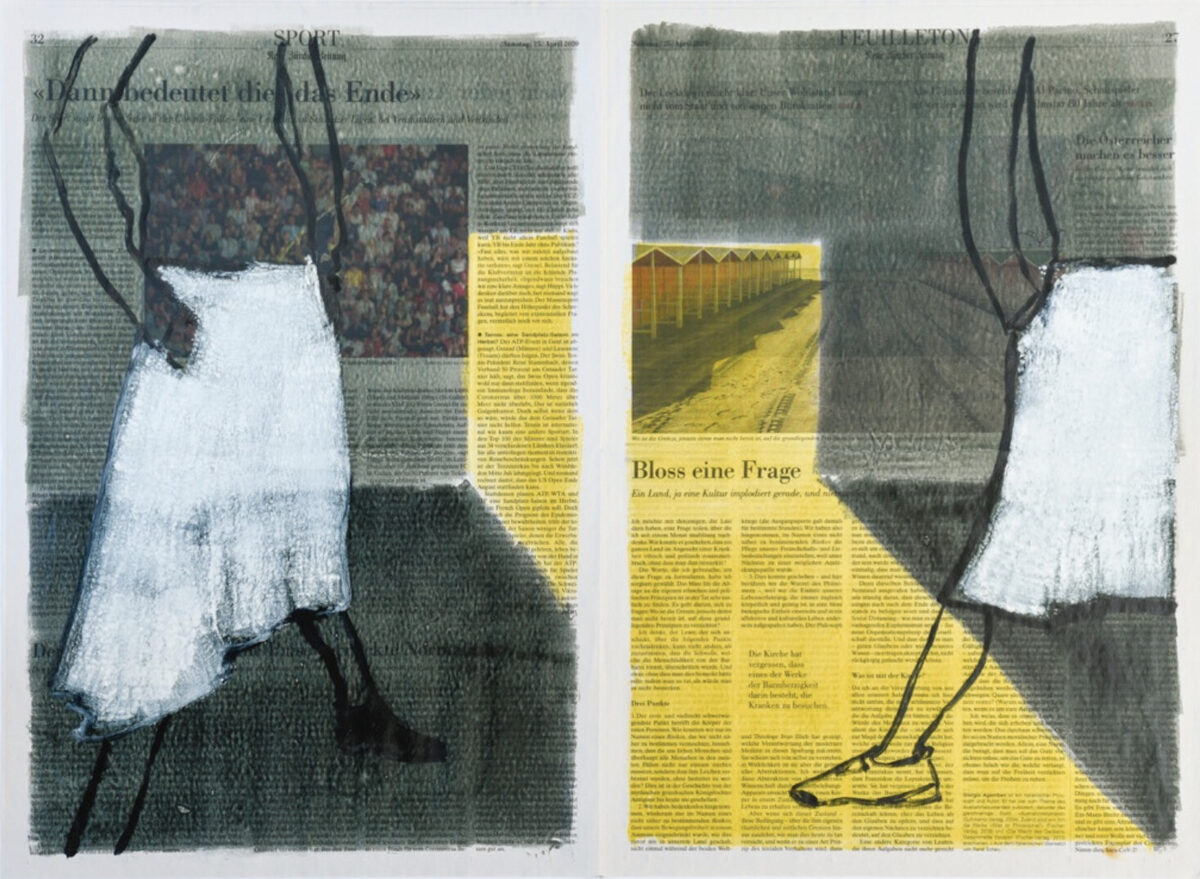
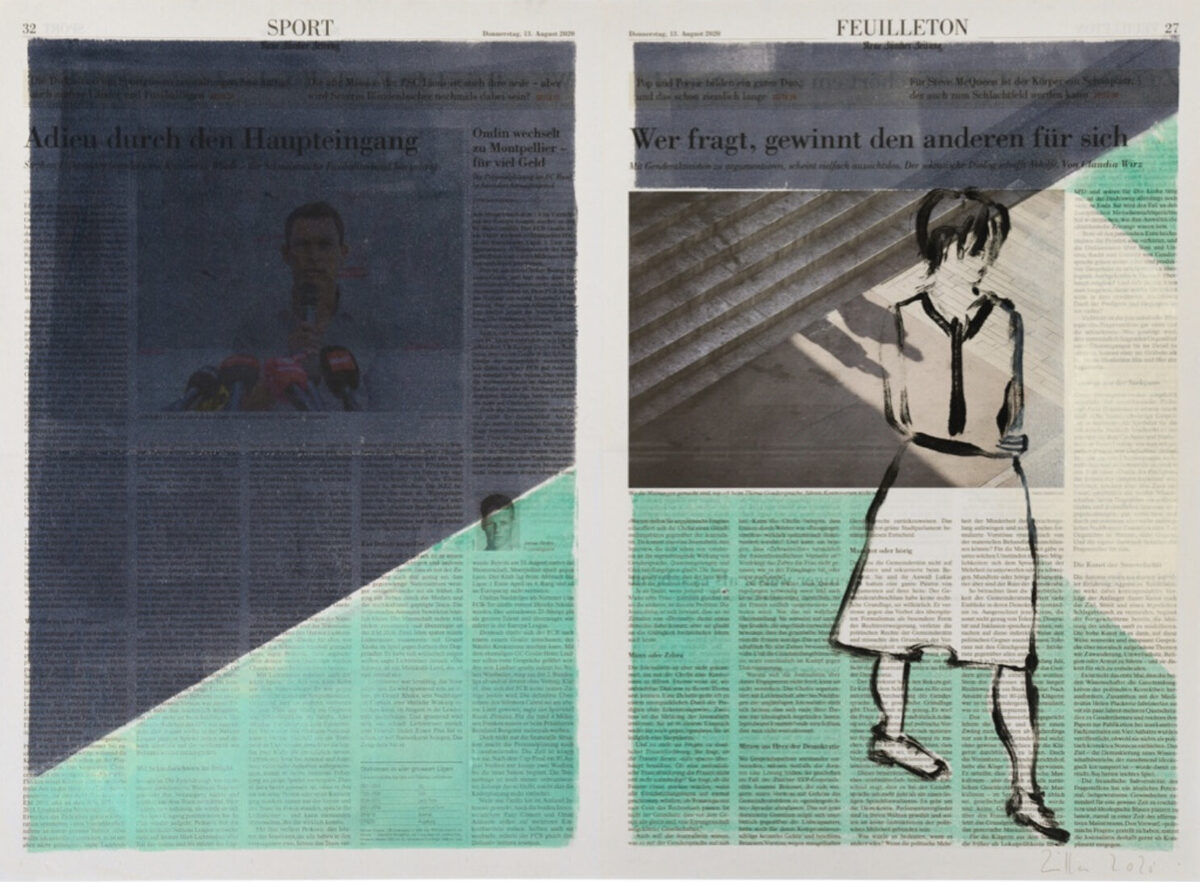
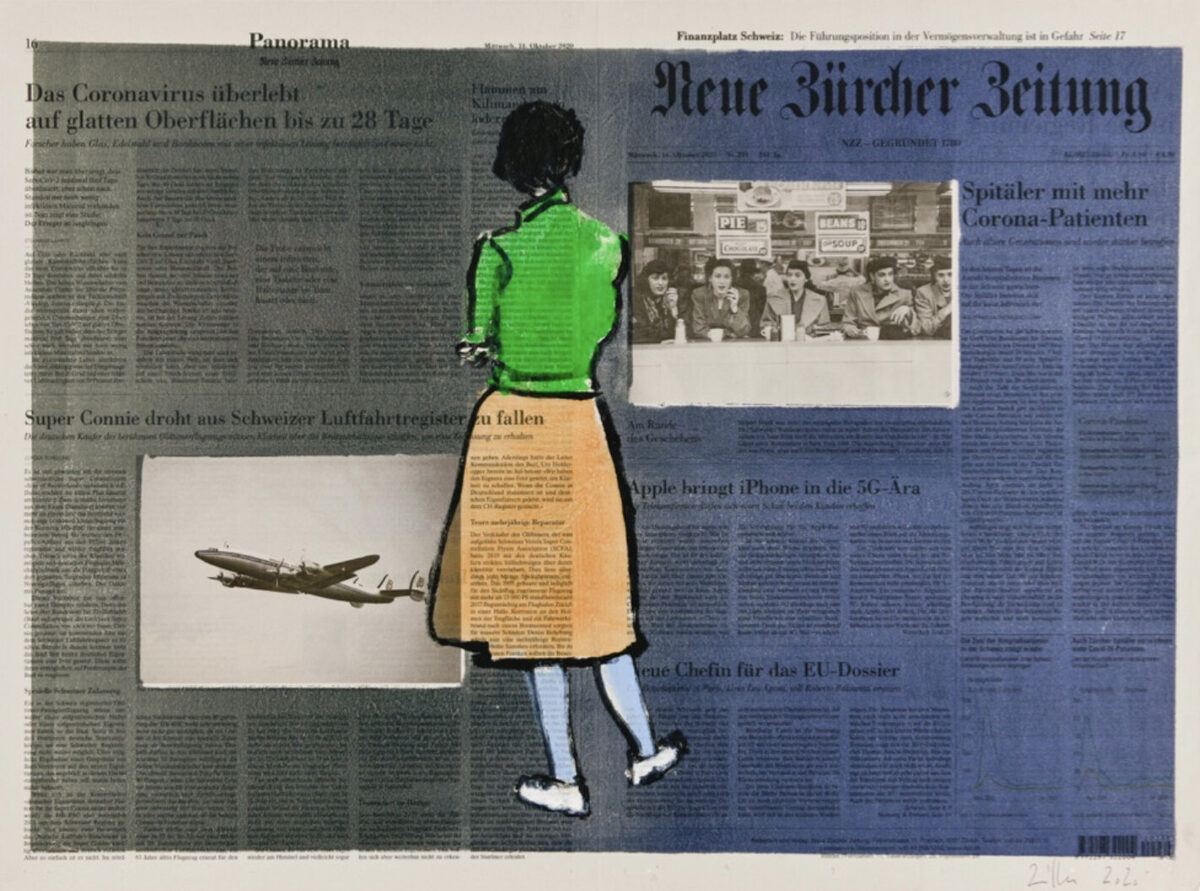
Zilla Leutenegger works in parallel across different media—drawing, painting, photography, spatial elements, and digitally processed images and sound. The figure of the artist plays a central role in her œuvre. She often appears as the main protagonist in her works: in role-plays with different variations of a single figure whose poses often echo images from fashion or lifestyle magazines. Her drawings are mostly in pencil and often accentuated with acrylic. The contours of the figures are captured in a sparse, sometimes awkward line. Drawing and video converge in the innovative medium of the video drawing, which Leutenegger often uses. These drawings projected onto the wall show a short movement that repeats constantly, making time tangible. Minimal gestures open up a space of their own for the figures. In works such as Forget the Day (2003) or Honey (2005) the video drawing is extended by a mural tracing the sketched protagonist from the video. The aspects of time and movement characteristic of video bring the static wall image to life when the projection is switched on. Leutenegger’s video reliefs such as Level 49 1–3 (2006) extend into the third dimension, showing images of traffic on Tokyo urban motorways projected onto wooden wall reliefs. The Munich apartment made of drawings, various projections and three-dimensional spatial elements that could be walked through, presented in the Goetz Collection in 2006, was assembled by the artist from several works. Leutenegger’s works show intimate, private settings. She often interweaves several media and works with clichéd motifs that she places in childlike dream worlds. The artist addresses questions of female identity and plays a humorous game with elements from the world of fashion and popular culture—for example in the video drawing that shows the British designer Mary Quant, inventor of the miniskirt, with a floral scarf in sixties style. In the video installation Der Grosse Schnee (2003), which takes its title from a well-known children’s book, the artist seems to throw snowballs from the image into the gallery space, where balls of crumpled, discarded drawings lie on the floor and on plinths. The 2006 video work Prada shows a woman in the eponymous Tokyo boutique by architects Herzog & de Meuron. The protagonist, constantly trying on new clothes and accessories, embodies a dream out of reach for many women. The audience reflected on the projection surface accompanies the fitting until the scene finally dissolves in a kaleidoscope of image fragments. In these short loops and small stories too, Zilla Leutenegger succeeds in reconfiguring stereotypes in a cool, detached way.
Source: SIKART Lexikon zur Kunst in der Schweiz | Marco Obrist
Image: Maurice Haas, NZZ
Article: Für Zilla Leutenegger ist die Zeichnung eine Form des Denkens | Mit wenigen Strichen stellt Zilla Leutenegger ihre Bildfigur vor und verleiht ihr auch in der Andeutung eine eigene Existenz. | Angelika Affentranger-Kirchrath | NZZ, 14. März 2021